The Ghana Mineworkers’ Union (GMWU-TUC), through its National Women’s Committee, marked International Women’s Day 2026 with resolute commitment to advancing the rights, dignity, and agency of women and girls—particularly those aspiring to careers in science, technology, engineering, and mathematics (STEM) within the extractive industries.
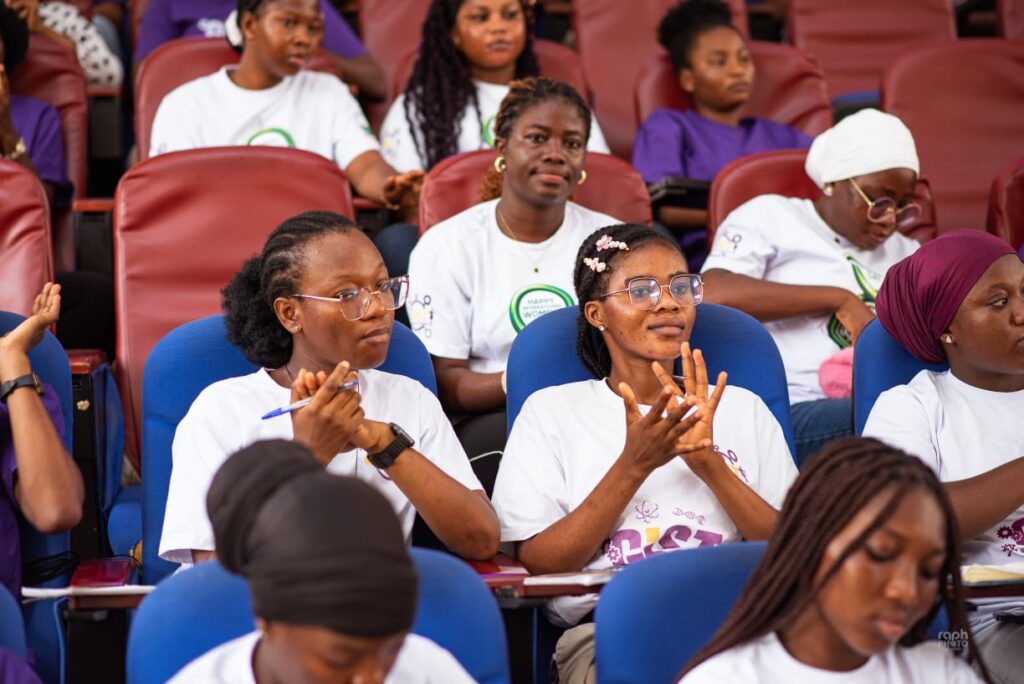
In a targeted engagement held in collaboration with the Girls in Science and Technology (GIST) initiative and the University of Mines and Technology (UMaT), the Union convened young female students for an empowering dialogue aligned with the global theme “Rights. Justice. Action. For ALL Women and Girls.”
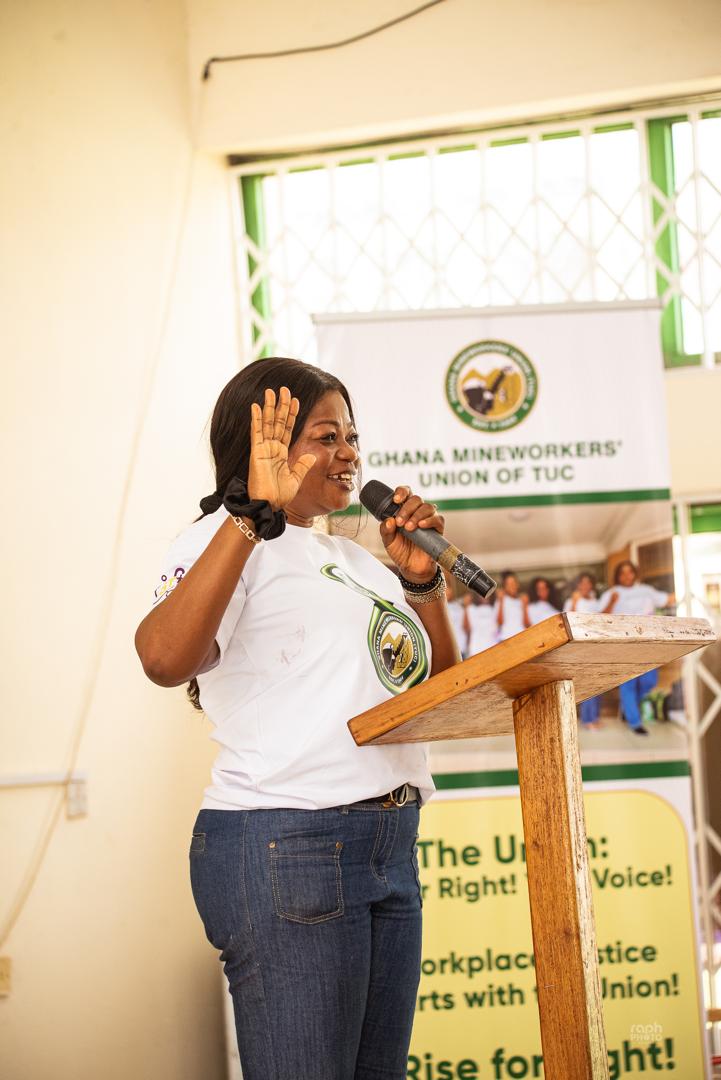
Sister Vida Brewu, Deputy Head for Training, Programmes, and Stakeholder Engagement at the Ghana Mineworkers’ Union–TUC, delivered a compelling address that laid bare the intersecting burdens and systemic barriers confronting women and girls today. She articulated the profound multiplicity of roles women are compelled to fulfil: attaining academic and professional excellence, meeting rigorous workplace demands, nurturing future generations, and driving national socio-economic progress—yet all while contending with entrenched structural obstacles that perpetuate inequality.
Sister Brewu enumerated the persistent challenges that undermine girls’ full participation and advancement in STEM and related fields. These include deeply rooted socio-cultural norms that consign women to disproportionate domestic and reproductive labour; grossly inadequate institutional infrastructure, such as substandard sanitation facilities for menstrual hygiene management and poorly illuminated environments that heighten risks to personal safety; chronic under-representation in decision-making spaces; the absence of structured mentorship programmes; pervasive experiences of sexual harassment; and insufficient targeted academic and career-support mechanisms.
Collectively, these factors continue to obstruct girls’ and women’s progression into research, innovation, academic leadership, and senior professional roles within the mining sector and beyond. Drawing from the Union’s long-standing struggle for workers’ rights and gender justice, Sister Brewu issued a clarion call to action. She insisted that true empowerment begins with rights consciousness: young women must internalise and assert their fundamental entitlements as inalienable human rights. She urged them to demand justice without compromise—challenging discriminatory laws, harmful practices, and institutional neglect—and to translate awareness into organised, collective action.
Central to this transformation, she emphasised, is the strategic building of networks, the fearless voicing of grievances, and the refusal to accept marginalisation. “Rise to claim your rights,” she exhorted the girls. “Advocate relentlessly for systemic change. Take decisive ownership of your trajectories toward dignity, equity, and success.”
The session featured a panel of accomplished female mining professionals who shared hard-won insights into surviving and thriving in a historically male-dominated industry. Their testimonies reinforced the Union’s message: solidarity, mentorship, and institutional advocacy remain indispensable weapons in dismantling gendered barriers. Through this initiative, the Ghana Mineworkers’ Union reaffirms its role as a militant defender of working women’s rights.
